Seamless Willow Leaf Patterns
Willow tree leaves have a distinctive elegance—long, slender, and slightly asymmetrical. When reduced to silhouettes and arranged into seamless patterns, they create a visual rhythm that feels both organic and deliberate. Unlike denser foliage patterns, willow leaves offer breathing room, making them ideal for applications where you want texture without overwhelming the composition. Whether you work in surface design, digital media, or product branding, a well-crafted seamless pattern built from willow leaf silhouettes can anchor a project with quiet sophistication.
What Makes Willow Leaf Silhouettes Stand Out
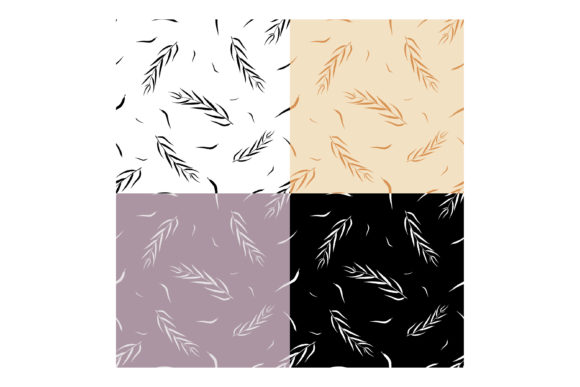
A silhouette strips a leaf down to its purest contour. Without internal veins or color gradients, the shape itself becomes the focus. Willow leaves are naturally long and narrow, often curving slightly at the tip. When repeated across a seamless tile, these forms create flowing lines that guide the eye. The negative space between leaves becomes as important as the leaves themselves. This balance makes willow leaf patterns feel airy and graceful, unlike more blocky foliage motifs. Designers often choose them for projects that call for a natural, calm, but not rustic aesthetic—think modern botanical, minimalist, or serene bohemian.
Fabric and Textile Design
Silk scarves, cotton dress fabrics, linen upholstery, and lightweight curtains all benefit from willow leaf repeats. Because the silhouettes are sparse and linear, they scale well. A small-scale repeat on cotton voile looks delicate, while a larger repeat on canvas makes a bolder statement. For printing on fabric, consider using a monochrome palette—charcoal on cream, or soft sage on white—to let the leaf shapes do the work. Alternatively, choose a metallic foil (gold or copper) on a dark base for an evening-wear effect. The key is consistency: ensure your seamless tile truly repeats without visible seams, especially on large fabric rolls.
Digital Backgrounds and Wallpapers
Website headers, social media templates, and device wallpapers can all incorporate willow leaf patterns. The elongated leaf shapes naturally draw the eye horizontally or diagonally, making them useful for guiding users across a layout. A subtle, low-opacity willow leaf pattern behind text creates depth without sacrificing readability. For bloggers and content creators, this kind of background adds a professional, curated feel. Matching the leaf color to your brand’s secondary palette keeps the pattern cohesive. Because the pattern is seamless, it scales perfectly for responsive design—no awkward clipping at screen edges.
Branding and Packaging
Willow leaf patterns lend themselves to eco-conscious branding, wellness products, and botanical-inspired packaging. Think about a tea company’s box, a handmade soap wrapper, or the inside sleeve of a notebook. The silhouettes read as natural without being literal. A vertical arrangement of willow leaves can echo the shape of the package itself, creating a harmonious unboxing experience. For small business owners, using a single seamless pattern across multiple product lines builds brand recognition. Vector-based seamless patterns are easy to resize and recolor, so you can adapt the same design for labels, hang tags, and shopping bags.
Orientation and Flow
The direction of the leaves changes the feel of the pattern. Horizontal repeats suggest calm, still water. Diagonally angled leaves add movement and energy. A mix of upright and slightly tilted leaves creates a more natural, wind-blown look. Experiment with different layouts: a simple grid, an offset brick, or a random scatter (still mathematically seamless). Each arrangement communicates a different mood. For a cohesive collection, develop two or three variations of the same willow leaf silhouette—upright, angled, and mirrored—and combine them in a single tile.
Layering and Composition
Silhouettes don’t have to stand alone. Overlap leaves at different opacities for a transparent, watercolor effect. Add subtle dots, thin lines, or geometric shapes in the background to give the pattern texture. Some designers combine willow leaves with smaller round leaf shapes (like aspen or coin leaves) to contrast the long forms. Others use the leaves as a frame for monograms or central motifs. Because the base shape is simple, it accepts embellishment without becoming chaotic. Always check that the seamless tile still reads cleanly at a small scale—overly complex layers can break when scaled down.
Color Palettes
Willow leaf patterns work well in both natural and unexpected colorways. Classic botanical palettes: moss green on ivory, or deep forest on graphite. For a contemporary twist, try dusty pink silhouettes on a warm terracotta ground, or bright citrus tones on navy. The silhouette format makes it easy to apply gradients or duotones across the leaves. Vector patterns allow you to swap colors instantly, so generate several versions before finalizing. Remember that contrast is crucial—a low-contrast palette (e.g., pale grey on white) is suitable for subtle backgrounds, while high contrast (black on white) is better for statement prints.
Maintaining Consistency Across a Collection
If you’re developing a series of patterns, keep the leaf silhouette consistent in thickness and curvature. Even small variations can make the set feel disjointed. Use the same stroke weight or outline if you’re working with line art, and the same level of simplification for filled silhouettes. For clients or products, create a style guide that specifies the leaf shape, minimum scale, and accepted color ranges. This ensures that the pattern remains recognizable whether it appears on a phone case or a bed sheet.
Optimizing for Different Formats
A seamless pattern meant for fabric must account for repeat size—typically 12 to 24 inches for home décor, or smaller for apparel. Digital backgrounds can use smaller tiles (e.g., 500x500 pixels) but need to be exported as high-res PNGs or SVGs for crispness on retina screens. For print-on-demand platforms, verify that the file meets their DPI requirements (usually 300 DPI) and that the pattern tile is large enough to cover the product without visible seams. Vector formats are best for scaling, but always rasterize at the correct resolution for final output.
Testing and Refining
Before committing to a full production run, print a small sample of the pattern at actual size. Check how the willow leaves interact with seams, zippers, and buttons if it’s for apparel. In digital projects, test the pattern against different background colors and with overlaid text. Sometimes a pattern that looks balanced in isolation becomes distracting when paired with content. Adjust the spacing between leaves to control visual weight. A tighter pattern reads as a texture; a looser pattern reads as individual motifs. Both can be right—it depends on the project’s purpose.
For Surface Pattern Designers and Illustrators
Build a library of willow leaf variations: solid silhouettes, outlined leaves, leaves with a subtle center line. Use these as building blocks for multiple pattern collections. Because willow leaves are less common than maple or monstera, they can help your portfolio stand out. Consider licensing your seamless patterns to fabric companies or home decor brands. The clean silhouette style appeals to a broad market—from modern farmhouse to Scandinavian minimal.
For Small Business Owners and Entrepreneurs
Use a willow leaf pattern as a signature visual element across your brand. It can unify product packaging, email headers, and website banners. Because the pattern is vector-based, you can adapt it for one-off items like stickers or wrapping paper without extra design costs. Keep the pattern simple and flexible—avoid trends that will date quickly. A neutral, leaf-based pattern pairs well with logos and other branding elements.
For Bloggers and Content Creators
Elevate your visual content by using willow leaf patterns as slide backgrounds, video transitions, or printable planner covers. A pattern that matches your aesthetic makes your content look cohesive. Choose a color that complements your primary imagery. For example, if you photograph food or landscapes, use a soft, muted version of the pattern as a backdrop. Avoid overusing it—apply the pattern sparingly (e.g., only on title slides or dividers) to keep the effect fresh.
Realistic Project Ideas to Try
- Tea packaging line: Four flavors, each with a different color version of the same willow leaf pattern. Use ivory paper with embossed leaves for a premium feel.
- Digital wallpaper set: Three seamless patterns—one with upright leaves, one with diagonals, and one with scattered leaves. Offer them as a free download for your email subscribers.
- Fabric collection for summer dresses: A light cotton poplin with an all-over willow leaf repeat in pale blue on white. A second version in dark indigo on ecru for a different vibe.
- Branded notebook inserts: Inside cover and page dividers printed with a subtle willow leaf pattern. Use a non-glare paper for writing comfort.
- Social media templates: Create a set of Instagram story backgrounds featuring a single willow leaf silhouette repeated on a gradient. Add your logo to the corner.
Keeping Your Pattern Clear and Original
Start with a distinct willow leaf shape—don’t just grab a generic leaf icon. Zoom in to refine the curve of the stem and the taper of the tip. Even a minor adjustment changes the pattern’s personality. Use a true seamless tile (top edge matches bottom, left matches right) so it repeats perfectly. Avoid the temptation to overpopulate the tile; negative space is your ally. Finally, name your pattern something descriptive and searchable, like “Willow Drift” or “Weeping Leaf Repeat.” This helps clients and customers find your work and gives the pattern a memorable identity.
Seamless patterns with silhouettes of willow tree leaves offer a versatile, elegant design solution for creators across industries. Their innate rhythm and clarity make them suitable for both physical products and digital media. By focusing on the silhouette’s purity, experimenting with orientation and color, and tailoring the pattern to specific applications, you can turn a simple leaf shape into a signature visual asset. Whether you’re printing on fabric, designing a brand, or building a content library, these patterns deliver consistency and charm without the noise.