Checkered Leaf Patterns for Modern Design
You have likely spent hours browsing pattern catalogs, looking for something that feels both structured and organic. Many designs lean too far in one direction—either rigidly geometric or chaotically natural. Seamless patterns with checkered leaves strike that rare balance, offering the crisp logic of a grid paired with the organic elegance of willow foliage. Whether you are printing fabric for a capsule collection, building a brand identity, or designing digital backgrounds that need to repeat without visible seams, this design style gives you a versatile foundation that works across media.
What Makes Checkered Leaf Patterns Distinct
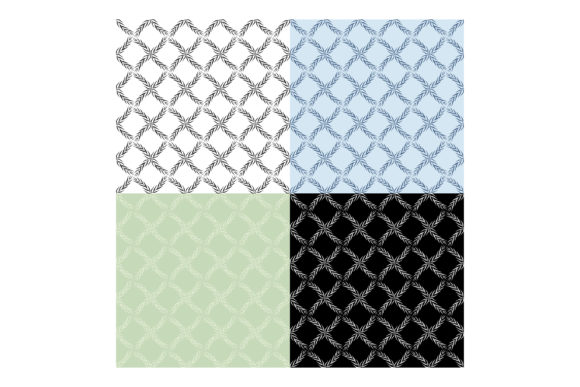
At first glance, these patterns appear deceptively simple. A checkered motif—alternating filled and empty squares—forms the backbone, but instead of plain squares, each cell contains a stylized silhouette of willow leaves. The willow leaf itself carries cultural associations with flexibility, resilience, and grace, making it a thoughtful choice for designs that want to communicate natural elegance without being overly literal.
The seamless nature of these patterns means they tile perfectly across any surface. No awkward edges, no visible repeats that break the illusion of a continuous surface. When you use seamless patterns with checkered leaves in your work, you eliminate the most common frustration of pattern application: the dreaded seam line that disrupts visual flow. For fabric printers, this is a critical feature. For digital designers, it means backgrounds that look infinite and intentional.
Key Characteristics That Matter in Practice
Several qualities make these patterns particularly useful for working professionals and creators:
- Vector format: You can scale the design infinitely without losing resolution. A pattern that works on a business card will also work on a billboard or a bed sheet. This single characteristic saves you from recreating assets for different outputs.
- Checkered structure: The repeating grid gives you predictable rhythm, which helps in layouts, repeats, and color separation. It is easier to match, rotate, or layer than freeform organic motifs.
- Willow silhouettes: The leaf shapes are simplified enough to remain legible at small sizes but detailed enough to hold interest when scaled up. They do not muddy into blobs when reduced, nor look clunky when enlarged.
- Seamless tiling: The pattern repeats identically on all edges, so you can fill any space without visible breaks. This is non-negotiable for fabric, wallpaper, and digital backgrounds.
- Monochromatic or color-ready: Most vector patterns come in black-and-white or single-color formats, but you can recolor them easily in your design software. This flexibility lets you adapt a single pattern set to many brands, seasons, or projects.
These characteristics make seamless patterns with checkered leaves a reliable workhorse asset for anyone who produces visual content regularly.
Fabric and Textile Printing
This is the most obvious home for these patterns. Checkered motifs read well on woven fabrics because the grid structure complements the natural weave. Willow leaf silhouettes add a botanical touch without feeling fussy or overly feminine, making them suitable for apparel, home textiles, and accessories. Imagine a lightweight scarf where the pattern repeats every few inches, or a set of linen napkins where each napkin shows a different section of the seamless design. Whether you run a small print-on-demand shop or a full production line, the vector origin means you can output at any scale without degradation.
Digital and Web Design
Background patterns on websites, apps, and presentations often suffer from being either too loud or too forgettable. A checkered leaf pattern sits comfortably in the middle. It adds texture and visual interest without competing with foreground content. You can use it as a full-page background at reduced opacity, as a subtle repeating element in a hero section, or as a border pattern that wraps around key sections. The seamless tiling ensures that your background never cuts off awkwardly at the edge of a screen.
Branding and Packaging
Small businesses and product designers frequently look for pattern assets that can become signature elements. A consistent pattern across packaging, tissue paper, stickers, and business cards builds brand recognition. Willow leaf patterns carry a natural, eco-friendly connotation that works well for organic food brands, skincare lines, or sustainable lifestyle products. The checkered structure adds a modern, almost architectural feel that prevents the design from looking too rustic or dated.
Stationery and Print Products
Notebooks, planners, greeting cards, and wrapping paper all benefit from a repeating pattern that feels curated. Checkered leaf patterns give stationery a sophisticated edge—professional enough for corporate gifts, artistic enough for boutique collections. For educators and bloggers, these patterns can serve as printable backgrounds for worksheets, lesson plans, or digital planners. The vector format means you can generate multiple color variations for seasonal or thematic releases.
Surface and Product Design
Beyond fabric and paper, think about ceramics, decals, laminates, or even temporary tattoos. Any surface that accepts a printed or applied design can use seamless patterns with checkered leaves. Because the pattern is vector-based, you can resize it to fit the exact dimensions of your product without losing quality or creating awkward repeats. Product designers appreciate this efficiency because it reduces the number of design iterations needed to get a pattern that fits correctly.
Real-World Benefits You Can Expect
Using these patterns saves you time, reduces design friction, and improves the consistency of your output. Here is what that looks like in practice:
- Faster project setup: You skip the pattern-creation phase entirely. Instead of drawing repeating leaf motifs from scratch, you pull a ready-made vector file and adjust colors or scale as needed. For freelancers and small teams, this speed translates directly to higher output capacity.
- Fewer production errors: Seamless patterns eliminate the common mistake of misaligned repeats. When you export a fabric file or a digital background, you can trust that the tiles match perfectly. This reduces waste, rework, and client revisions.
- Better visual hierarchy: Checkered patterns create a natural grid that helps organize other design elements. You can place text, logos, or images over them without fighting the background. The pattern supports your content rather than overwhelming it.
- Consistent brand language: Using the same pattern across products, packaging, and digital presence creates a cohesive look. Your audience recognizes your brand by its design signature, which builds trust and recall over time.
- Adaptability without redesign: A single vector pattern can yield dozens of color variations. You can create an entire season of products from one base design, changing only the palette. This is especially valuable for marketers and entrepreneurs who need to refresh their line quickly.
Choosing and Using These Patterns
Not all checkered leaf patterns are created equal. When you evaluate options, consider these factors:
Leaf clarity at small scales. Some silhouettes become too detailed and lose shape when reduced. Look for patterns where the willow leaves remain distinct even at thumbnail size. Test the pattern at the dimensions you actually plan to use.
Tile seam quality. Even among seamless patterns, some tile more smoothly than others. Open the file in your design software and test a repeat across a large area. Look for any predictable visual breaks or density shifts that could reveal the tile structure.
File format and software compatibility. Vector files should be in common formats like AI, EPS, or SVG. If you work in a non-Adobe environment, SVG compatibility matters. Raster previews are fine for reference, but the vector source is what gives you flexibility.
Color separation readiness. For fabric printing, especially screen printing, you may need patterns that separate easily by color. A pattern with clearly defined shapes makes color separation straightforward, which lowers production costs and reduces errors.
Licensing for commercial use. If you plan to sell products or use the pattern in client work, verify the license terms. Many pattern sets allow commercial use, but some restrict resale, redistribution, or use in large-scale branding. Read the fine print before building a product line.
Practical Recommendations for Getting Started
If you are new to working with checkered leaf patterns, here is a straightforward workflow:
- Open the vector file in your preferred design software. Adobe Illustrator, Affinity Designer, or Inkscape all handle vector patterns well.
- Adjust the scale to fit your target surface. For fabric, consider the repeat length—typically 24 to 36 inches for apparel. For digital, match the pattern size to your canvas or screen dimensions.
- Recolor the pattern to suit your project. If the pattern is monochrome, create a color group that reflects your brand or product theme. Keep the checkered structure visible by using contrasting values.
- Test the pattern on a mockup before committing to production. A quick digital mockup reveals scale issues, color balance problems, or unexpected visual effects you might miss in a flat preview.
- Apply the pattern to your final asset. For fabric, save as a production-ready file with the correct dimensions, bleed, and color space. For digital, export at screen resolution and test the seam on a large monitor.
Seamless patterns with checkered leaves give you a reliable design element that performs across mediums. The combination of structural grid and organic silhouette offers flexibility that pure geometry or pure nature rarely provide on its own. Whether you are designing for print, digital, or product, this pattern style supports your work without demanding constant attention. It is a background player that elevates everything around it.