The Timeless Appeal of Chestnut Silhouettes in Seamless Pattern Design
Nature has always been one of the richest sources of inspiration for artists, designers, and creators. Among the many botanical motifs that have found their way into visual art, the chestnut—both its nut and its leaf—holds a distinctive place. Chestnut silhouettes, with their elegant, rounded forms and deeply veined leaves, offer a unique combination of organic structure and decorative versatility. Whether you are a textile designer, a surface pattern enthusiast, or simply someone who appreciates the beauty of natural forms, understanding how chestnut patterns work and why they resonate can deepen your creative practice.
This article explores the world of chestnut silhouette patterns from the ground up. We will look at what makes these motifs special, how seamless patterns with chestnut leaves are constructed, where they are used in modern life, and why they continue to captivate designers and consumers alike. By the end, you will have a clear understanding of this design element and practical insight into how it fits into contemporary decoration, fabric printing, and brand identity.
What Are Chestnut Silhouettes in Design?
A silhouette, in design terms, is the solid, outline-based representation of an object. When we talk about chestnut silhouettes, we are referring to the simplified, often monochrome shapes of chestnuts and chestnut tree leaves. These silhouettes strip away color and texture, focusing instead on the pure contour and form of the subject.
The chestnut itself is a spiny, rounded nut encased in a burr, while the chestnut leaf is long, serrated, and marked by parallel veins that run from a central spine. In silhouette form, these features become clean, recognizable shapes that can be repeated, rotated, and arranged into patterns. The result is a design element that feels both natural and graphic—rooted in the real world but abstract enough to function as a versatile ornamental tool.
Designers often choose chestnut motifs for several reasons:
- Organic elegance: The curved forms of chestnuts and the linear structure of their leaves create a natural balance between softness and structure.
- Seasonal resonance: Chestnuts are strongly associated with autumn, harvest, and cozy interiors, making them a popular choice for seasonal collections.
- Symbolic value: In many cultures, chestnuts symbolize abundance, longevity, and warmth, adding a layer of meaning to the visual design.
- Versatility: Silhouettes work equally well in minimalist, boho, rustic, or modern contexts, depending on how they are styled.
Understanding Seamless Patterns with Chestnut Leaves
A seamless pattern is a repeating design in which the motifs align perfectly at the edges, so that when tiled, the pattern appears continuous and unbroken. Creating a seamless pattern with chestnut silhouettes requires careful planning of motif placement, scale, and spacing. The goal is to produce a repeat that feels organic yet structured, natural yet intentional.
When working with chestnut leaf silhouettes, designers typically consider several key elements:
- Motif selection: Choose a combination of whole chestnuts, open burrs, single leaves, and leaf clusters. Varying the size and orientation adds visual interest.
- Repeat type: Common repeat structures include block repeat, half-drop repeat, brick repeat, and random scatter. For chestnut motifs, a half-drop or random scatter often works well because it mimics the natural distribution of leaves and nuts.
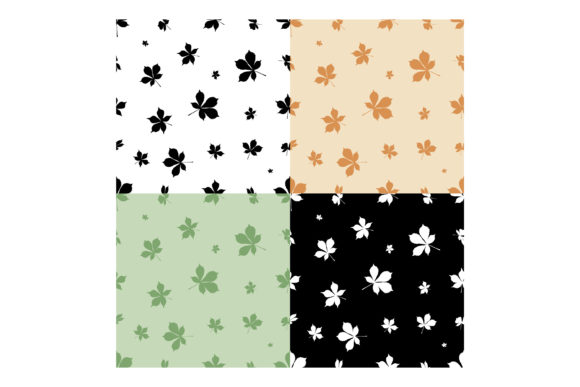
- Color and contrast: Silhouettes are often rendered in a single color against a contrasting background—dark brown on cream, black on white, or deep green on gold. The high contrast emphasizes the clean lines of the shapes.
- Scale and density: A dense pattern with many small chestnut leaves creates a rich, textured look. A sparse arrangement with larger silhouettes feels more airy and modern. The choice depends on the intended use.
- Flow and rhythm: Good seamless patterns guide the eye smoothly across the surface. Chestnut leaves with their long, curved veins can be arranged to create directional flow, giving the pattern movement and life.
One common misunderstanding is that seamless patterns are simply a matter of copying and pasting a motif. In reality, creating a high-quality seamless pattern—especially one based on organic shapes like chestnut leaves—requires careful attention to corners, edge matching, and visual balance. A poorly constructed repeat will have obvious seams, awkward gaps, or a distracting "grid" effect. Professional designers use specialized software or manual grid techniques to ensure the pattern tiles perfectly.
Where Chestnut Silhouette Patterns Are Used
The practical relevance of chestnut silhouette patterns spans multiple industries and creative fields. Their natural, elegant aesthetic makes them a favorite for both physical products and digital assets. Here are some of the most common applications:
Textile and Fabric Printing
Perhaps the most traditional use of chestnut patterns is in fabric design. Seamless patterns with chestnut leaves are printed on cotton, linen, silk, and polyester for use in apparel, home textiles, and accessories. Think of a flowing dress with a subtle all-over chestnut print, or a set of linen napkins adorned with autumn leaves. The monochrome silhouette style works especially well for screen printing and digital fabric printing because the solid shapes hold their definition even on textured surfaces.
Fashion brands often incorporate chestnut patterns into fall and winter collections, pairing them with earthy tones like rust, olive, and mustard. The pattern can be used as an all-over print, a border design, or an accent element on collars, cuffs, or pockets.
Home Decoration and Interior Design
In interior design, chestnut silhouette patterns appear on wallpaper, upholstery, curtains, rugs, and decorative pillows. A feature wall with a large-scale chestnut leaf pattern can bring a touch of nature indoors without overwhelming the space. Smaller items like throw blankets or ceramic tiles with chestnut motifs create subtle seasonal accents that can be rotated throughout the year.
Because chestnut silhouettes are graphic and clean, they also work well in modern, minimalist interiors where natural motifs are used sparingly for impact. A black-and-white chestnut pattern on a lamp shade or a cushion adds organic texture without clashing with contemporary furniture.
Stationery and Paper Goods
Gift wrap, greeting cards, notebooks, and journals frequently feature chestnut patterns. The silhouette style lends itself to foil stamping, embossing, and letterpress printing, adding tactile dimension to paper products. Wedding invitations with chestnut motifs are popular for autumn ceremonies, while rustic-themed party supplies often use chestnut leaves alongside other woodland elements like acorns and pinecones.
Digital Design and Branding
In the digital realm, chestnut silhouette patterns are used as website backgrounds, social media templates, and brand assets. A lifestyle brand focused on natural living, organic food, or outdoor adventure might incorporate chestnut patterns into its visual identity. The pattern can be used in a subtle, low-opacity version as a background texture, or as a bold overlay on hero images.
Vector-based chestnut silhouette patterns are especially valuable because they are resolution-independent and can be scaled to any size without losing quality. This makes them ideal for responsive web design, where the same pattern needs to look crisp on a mobile screen and a large desktop monitor.
The Creative and Practical Benefits of Using Chestnut Silhouettes
Why choose chestnut silhouettes over other botanical motifs? The answer lies in their unique combination of aesthetic and practical advantages.
- Timelessness: Unlike trendy patterns that fade after a season, chestnut motifs have a classic, natural quality that remains appealing year after year.
- Ease of customization: Silhouettes are easy to recolor, resize, and rearrange. A single vector chestnut leaf can be used in dozens of pattern variations.
- Cross-cultural appeal: Chestnuts are recognized and valued in many parts of the world—Europe, Asia, North America—making the pattern suitable for global audiences.
- Layering potential: Chestnut silhouettes can be layered with other natural motifs (e.g., leaves, twigs, berries) to create complex, rich compositions without becoming visually chaotic.
- Print-friendly: Solid silhouette shapes print cleanly and consistently, reducing the risk of muddy details or registration issues in multi-color prints.
A common assumption is that silhouette patterns are simple or unsophisticated. In reality, a well-crafted chestnut silhouette pattern requires a deep understanding of composition, rhythm, and negative space. The best patterns feel effortless but are the result of deliberate design decisions.
How Chestnut Patterns Fit into Modern Life
In today's world, where mass production and digital consumption often dominate, there is a growing desire for authenticity, nature, and handcrafted feeling. Chestnut silhouette patterns satisfy this longing by bringing a piece of the outdoors into everyday objects. They remind us of walks in the woods, autumn afternoons, and the simple beauty of natural forms.
At the same time, these patterns are highly functional. A seamless chestnut pattern can be printed on demand, used in digital products, or incorporated into branding with minimal effort. For small businesses and independent creators, vector-based chestnut patterns offer an affordable way to add professional-quality ornamentation to their products without hiring a full-time illustrator.
Educationally, chestnut patterns are a great entry point for learning about pattern design, repeat construction, and vector illustration. Many beginners start with botanical silhouettes because the forms are forgiving and the results are immediately satisfying. Experienced designers, meanwhile, appreciate the challenge of creating original variations that stand out in a market full of generic nature patterns.
Tips for Working with Chestnut Silhouette Patterns
Whether you are a designer creating your own chestnut pattern or a buyer evaluating options for a project, here are some practical considerations:
- Check the repeat quality: Always test a seamless pattern at full tile before using it. Look for visible seams, color mismatches, or awkward spacing.
- Consider the substrate: A pattern that looks perfect on screen may behave differently on fabric, paper, or ceramic. Request a physical sample or test print if possible.
- Think about scale: A pattern that is too small may look like noise, while one that is too large may overwhelm the product. Consider the viewing distance and the item's size.
- Match the mood: Dark, dense chestnut patterns feel cozy and dramatic. Light, airy patterns feel fresh and calm. Choose the style that aligns with your brand or project goals.
- Combine thoughtfully: Chestnut silhouettes pair well with other botanical motifs, geometric shapes, and textural elements. Experiment with layering different patterns for a unique look.
Conclusion
Chestnut silhouette patterns represent a beautiful intersection of nature, art, and functionality. From fabric printing and home decoration to digital branding and stationery, these seamless patterns offer endless possibilities for creative expression. Their clean, recognizable forms make them accessible to beginners, while their design complexity allows experienced professionals to craft truly original works.
By understanding the fundamentals of silhouette design, repeat construction, and practical application, you can use chestnut patterns with confidence and creativity. Whether you are designing a fall collection, decorating your home, or building a brand identity, the chestnut's quiet elegance is sure to bring warmth, depth, and timeless appeal to your project.